Berkeley Lab Spearheads 13 Genesis Mission AI Initiatives for Scientific Discovery
According to Berkeley Lab News Center, the U.S. Department of Energy has selected Lawrence Berkeley National Laboratory to lead 13 AI projects under the Genesis Mission and to participate in more than 30 additional projects.
Shane Barrett·updated July 24, 2026
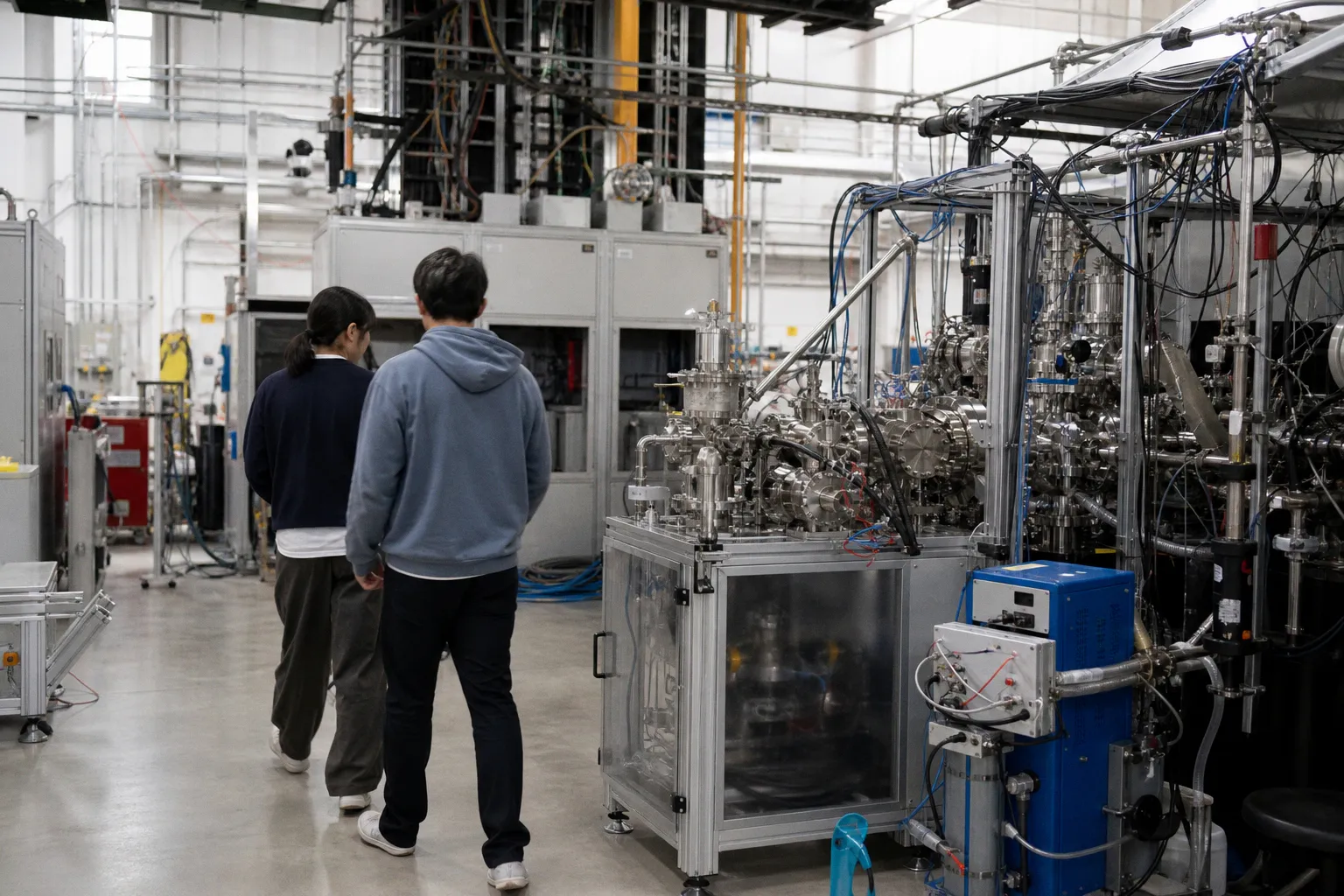
The announcement is an infrastructure commitment, not a benchmark result: the relevant technical question is whether the proposed AI–HPC workflows produce measurable improvements in prediction, experimentation, or discovery.
The Genesis Mission is intended to combine AI, supercomputing, quantum systems, and advanced scientific instruments in an integrated platform for scientific discovery. For ML researchers, the significance lies less in the broad platform claim than in the evaluation requirement attached to Phase 1: teams are expected to design and demonstrate workflows, then rigorously test whether those workflows accelerate discovery, improve predictive capability, enhance experiments, or yield new scientific insight.
A workflow-level evaluation target
Berkeley Lab’s projects span critical minerals, materials, manufacturing, fusion, and energy. These are domains where model quality cannot be reduced to a single held-out accuracy score. A credible evaluation must connect performance in latent or simulation space to an operational scientific outcome: a better candidate ranking, a more reliable prediction, or a more informative experimental decision.
The stated Phase 1 objective is to identify promising routes toward larger-scale scientific capabilities and establish a basis for future investment. That positions the program as an ablation problem at system scale. The central comparisons are implicit but necessary: AI-assisted workflow versus conventional workflow; model output versus instrument-derived evidence; computational overhead versus the value of an improved decision.
No project-level model architectures, datasets, code repositories, or evaluation protocols were specified in the announcement. Claims about foundation models, parameter efficiency, or quantum-enabled training would therefore be premature.
Compute is not evidence
Berkeley Lab frames its contribution around high-performance computing, large datasets, and prior AI research. Those assets can support training and inference at scientific scale, but they do not by themselves establish scientific validity. Integrated systems also introduce additional failure points: data provenance, simulator bias, distribution shift between historical and experimental data, and the cost of validation on physical instruments.
For researchers building similar pipelines, the useful artifact to watch is not a general statement of AI acceleration. It is a reproducible workflow description with defined inputs, model outputs, baselines, uncertainty handling, compute budget, and downstream validation criteria. Without those components, an apparent improvement can reflect access to larger computational resources rather than a methodologically stronger model.
What to track next
The next material disclosures should identify which of the 13 Berkeley Lab-led projects release technical specifications and how they define success. In materials and energy research, the practical threshold is a documented chain from dataset through model and scientific validation, with enough detail to separate model contribution from experimental or HPC capacity.
Argonne National Laboratory has also announced that it will lead AI research projects under the same DOE Genesis Mission. The program should therefore be assessed as a portfolio of independent scientific workflows, not as a single model release. The decisive outputs will be measured demonstrations, not the scale of the mission announcement.