Short Course: AI Applications Using Environmental Satellite Remote Sensing Data
The American Meteorological Society's Committee on Satellite Meteorology, Oceanography, and Climatology is running a four-session virtual short course on AI applications for environmental satellite…
Shane Barrett·updated July 01, 2026
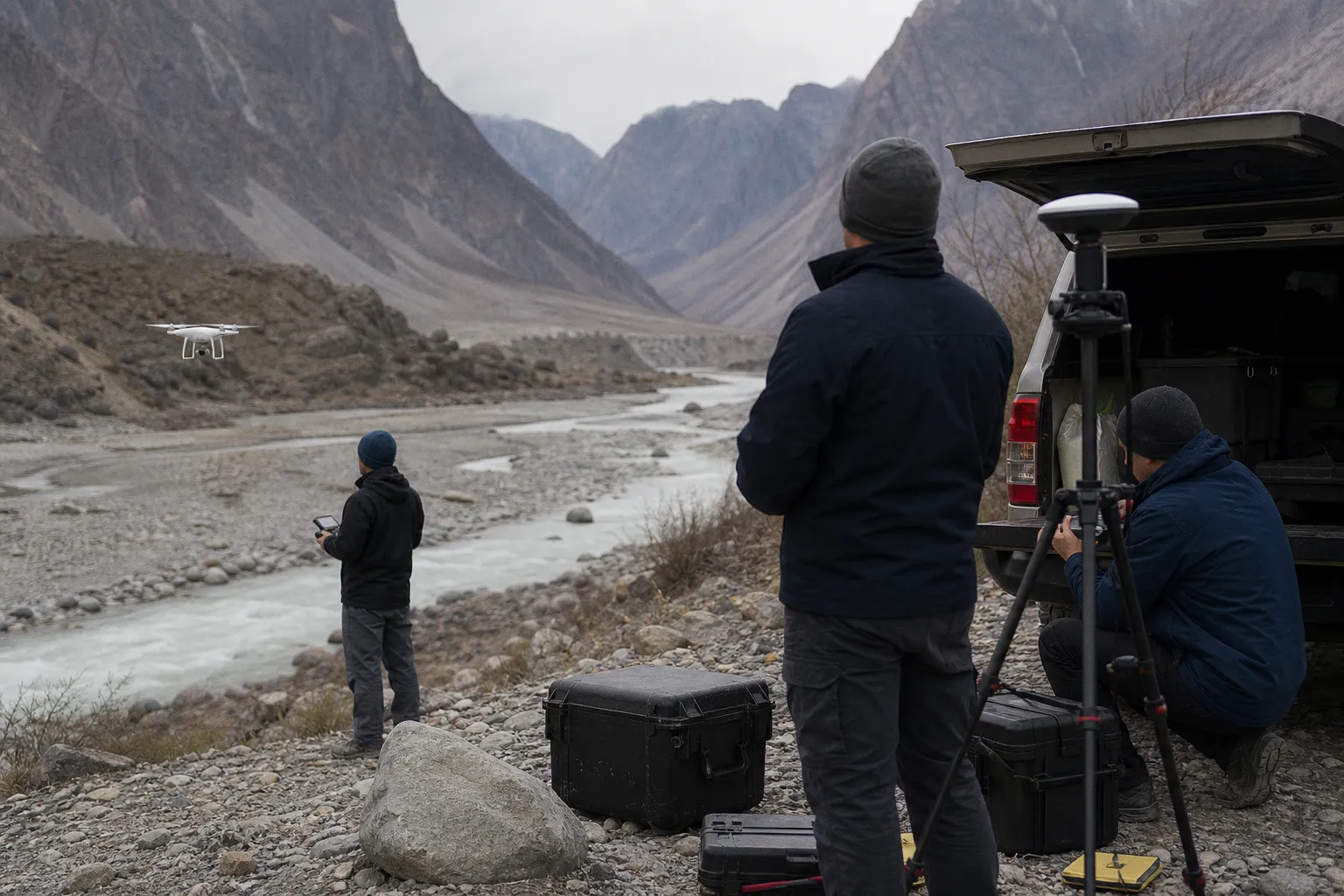
The American Meteorological Society's Committee on Satellite Meteorology, Oceanography, and Climatology is running a four-session virtual short course on AI applications for environmental satellite remote sensing data, with sessions scheduled for June 16, 18, 23, and 25, 2026. Training sessions run 9:00 AM to 1:00 PM ET, totaling 16 hours of instruction. The curriculum targets the gap between operational satellite data streams and machine learning pipelines, a recurring bottleneck for researchers attempting to move from raw sensor output to model-ready tensors.
Curriculum structure
The course proceeds sequentially from data access to application. Session 1 introduces environmental remote sensing fundamentals, current geostationary and low-Earth orbit capabilities, and workflows for retrieving open-source and ML-driven products. Session 2 shifts to dataset engineering: standards developed by the Earth Science Information Partners (ESIP) Data Readiness Cluster for AI-ready datasets, illustrated through satellite passive microwave observations of tropical cyclones. Sessions 3 and 4 extend into ML applications across land and atmospheric use cases. Each module embeds hands-on exercises; pre-processing examples for the dataset session are delivered as Python-based Jupyter notebooks that attendees execute during the live session.
Tools and formats
Practical work centers on community-standard file formats and Jupyter notebook execution rather than bespoke tooling, meaning attendees can replicate the preprocessing pipeline outside the live environment. The satellite passive microwave case study provides a concrete benchmark for measuring how ESIP readiness criteria translate into usable input tensors for downstream models. Participants attending a minimum of three sessions with at least one hour of engagement per session receive certificates of completion.
Track record and access
Session 1 is led by Christopher Smith, GOES-R Satellite Liaison for the National Weather Service's Weather Prediction Center and Ocean Prediction Center, affiliated with CISESS and ESSIC at the University of Maryland. Session 2 is delivered by Naufal Razin of the Cooperative Institute for Research in the Atmosphere at Colorado State University, whose work focuses on ML preprocessing of atmospheric datasets. The course is positioned primarily for undergraduate and graduate students; career-transition practitioners are also named as a secondary audience.
What to verify after registration
Three points merit attention before committing time. First, whether the Jupyter notebooks for Session 2 will be released publicly post-course, since they would constitute reusable preprocessing references for any group working with passive microwave satellite data. Second, the extent to which the land and atmospheric application sessions reference specific architectures or simply survey use cases. Third, whether datasets demonstrated during the sessions are downloadable or require additional licensing beyond the open-source access pathways described in Session 1.