How to use artificial intelligence to strengthen scientific processes and scholarly output
UNESCO and the Computing and Artificial Intelligence Laboratory at the Brazilian Center for Physics Research (AI-Lab/CBPF) jointly issued a call for remote access to artificial intelligence and high-performance computing infrastructure.
Shane Barrett·updated July 06, 2026
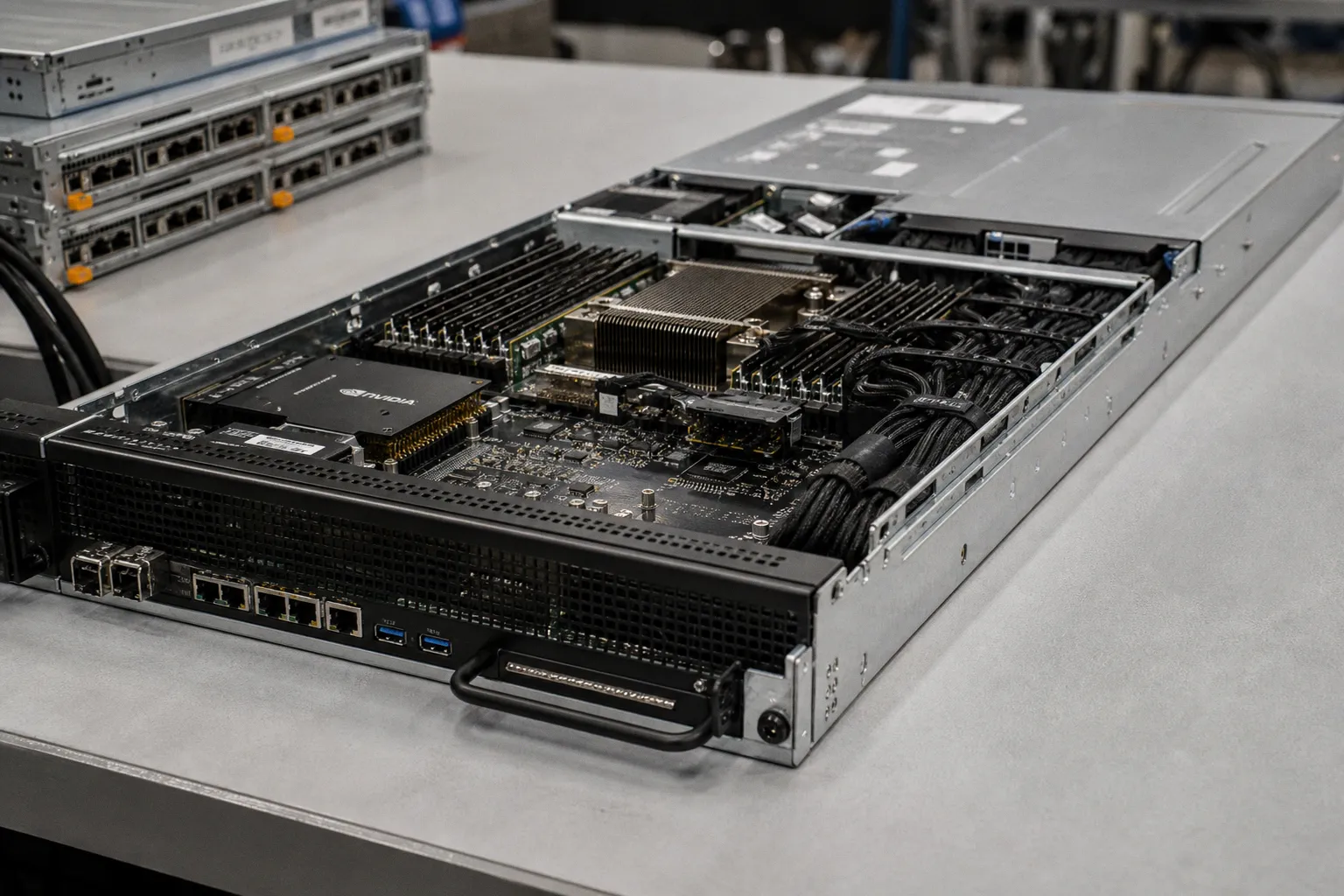
UNESCO and AI-Lab/CBPF open remote compute channel for under-resourced researchers
Program scope and eligibility
The initiative exposes an HPC environment hosted in Latin America to collaborative projects in AI, data science, and computational modeling, with stated coverage of life sciences, environmental health, and digital innovation. Capacity-building is built into the deployment: selected participants receive mentoring, joint training sessions, and entry into collaborative data challenges.
Eligibility is restricted to MSc and PhD students, postdoctoral researchers, and junior faculty members affiliated with institutions in Latin America and the Caribbean, Africa, Ukraine, and all Small Island Developing States (SIDS). Applicants must present a defined research project or innovation proposal and demonstrate English proficiency. Inquiries route through [email protected] or directly to Prof. Clécio R. Bom and Prof. Marcelo Portes de Albuquerque at CBPF.
What this changes for ML practitioners
For researchers in the eligible regions, the call substitutes remote GPU/HPC time for the typical self-funded cloud spend that constrains ablation studies and large-scale fine-tuning. The data-challenge component introduces a benchmark-style evaluation layer, which is relevant for teams needing external validation of model performance under fixed compute budgets. Researchers outside the listed regions gain a reference architecture: a UN-affiliated remote-access HPC stack with structured mentorship, replicable at institutional scale.
Adjacent signals worth tracking
Two concurrent items frame the broader research workflow context. The Transmitter published guidance on using AI to strengthen scientific processes and scholarly output, and PsyPost reported a model that charts sleep stages without intrusive brain sensors — a reminder that low-sensor, compute-bound biomedical inference remains an active subfield. Neither item carries sufficient detail in available snippets to assess methodology or benchmark claims; both warrant source-level review before citation.
Practical checks before applying
- Confirm institutional affiliation falls within LAC, Africa, Ukraine, or SIDS.
- Prepare a project specification with explicit compute requirements, since remote-access quotas are typically bounded.
- Draft a reproducibility plan: datasets, baselines, and evaluation metrics aligned with the data-challenge format.
- Verify English-proficiency documentation requirements with the listed CBPF contacts prior to submission.
No application deadline, quota size, or compute-tier specification appears in the available UNESCO release. These parameters constitute the next material data points required to assess throughput and turnaround for accepted projects.