NSF Allocates $83 Million to Build Foundational Data Infrastructure for AI Research
NSF describes IDSS as an investment in national-scale data systems intended to make scientific data more accessible and reusable across facilities, research centers and national laboratories.
Shane Barrett·updated July 26, 2026
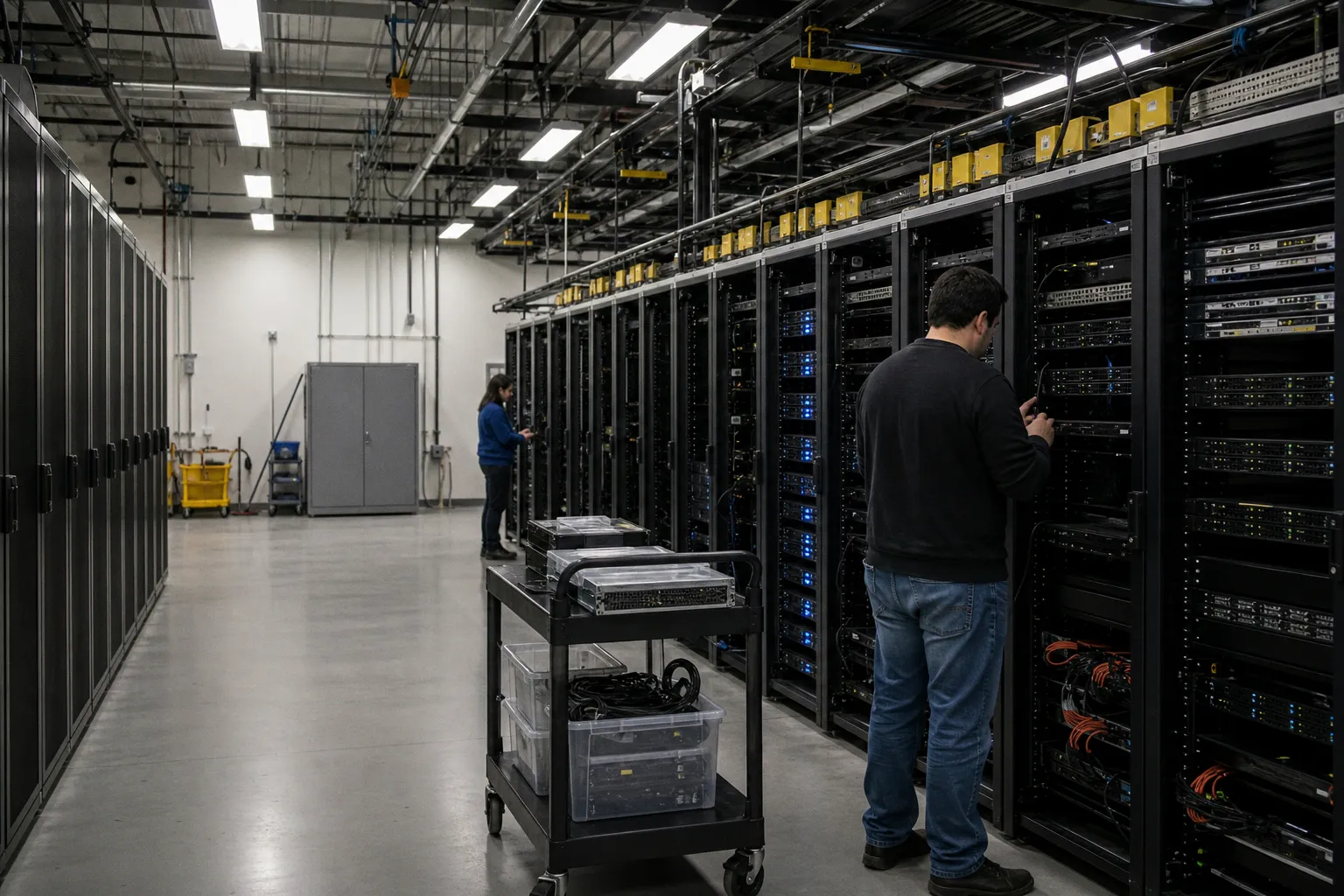
According to the U.S. National Science Foundation, the agency has announced $83 million in awards through its Integrated Data Systems and Services program. The funding targets the layer beneath AI-driven research: systems for collecting, storing, sharing and analyzing scientific data alongside computing, instruments, software and AI resources. For ML researchers, the signal is infrastructural rather than model-specific. No benchmark, architecture, training run or released code is identified in the announcement.
Data integration, not another compute allocation
The stated design objective is integration: data systems, AI models and computing resources should work together rather than remain isolated components of separate projects.
That distinction matters. Compute access alone does not resolve dataset discoverability, schema fragmentation, provenance gaps or the overhead of moving data between instruments, storage and training environments. Those constraints determine whether a model can be evaluated, reproduced and transferred across research settings. The announced awards address the surrounding data substrate, not parameter efficiency or latent-space design.
The program also includes shared platforms meant to help researchers find, use and reuse data across projects and disciplines. In practical terms, that is the condition required before cross-domain AI workflows can move beyond one-off pipelines.
Relationship to the AI research stack
NSF positions IDSS as complementary to the National Artificial Intelligence Research Resource and other cyberinfrastructure investments. The proposed stack combines scientific data, advanced computing and AI tools. The agency’s claim is that this combination will reduce the infrastructure-management burden on scientists and engineers, allowing more effort to shift toward analysis and discovery.
The claim is plausible as an architectural objective, but the announcement does not provide ablation studies, service-level metrics, dataset specifications or interoperability results. It therefore cannot yet support conclusions about throughput, reproducibility, model performance or computational overhead. The relevant unit of evaluation will be the individual award and its operational interfaces, not the aggregate $83 million figure.
Several planning grants were also awarded for future Category I and Category II data-infrastructure proposals. This indicates that the program is structured as an expanding infrastructure pipeline rather than a closed deployment.
What researchers should monitor
The useful follow-on material will be project descriptions and the concrete resources they expose. Developers should look for machine-readable metadata, access conditions, dataset versioning, provenance controls, storage-to-compute integration and documented interfaces for model training and evaluation. Without those properties, “integrated” infrastructure remains an administrative label rather than an executable research asset.
Attention should also go to whether the platforms support data reuse across fields without obscuring domain-specific constraints. Scientific datasets are not interchangeable training corpora. Their value for AI depends on annotation quality, collection context, licensing, access controls and the ability to preserve those variables through downstream pipelines.
NSF frames the investment as support for AI-ready research infrastructure and workforce development. For the ML community, the measurable outcome is narrower: whether the funded systems make scientifically grounded data easier to locate, validate, reproduce and connect to compute.