Researchers build missing infrastructure to move AI between robots
You know that feeling when you unbox a shiny new robot arm—full of ideas for the policy you want to train—and then spend the next six weeks wrestling with driver conflicts, mismatched message types…
Tara Linsley·updated July 11, 2026
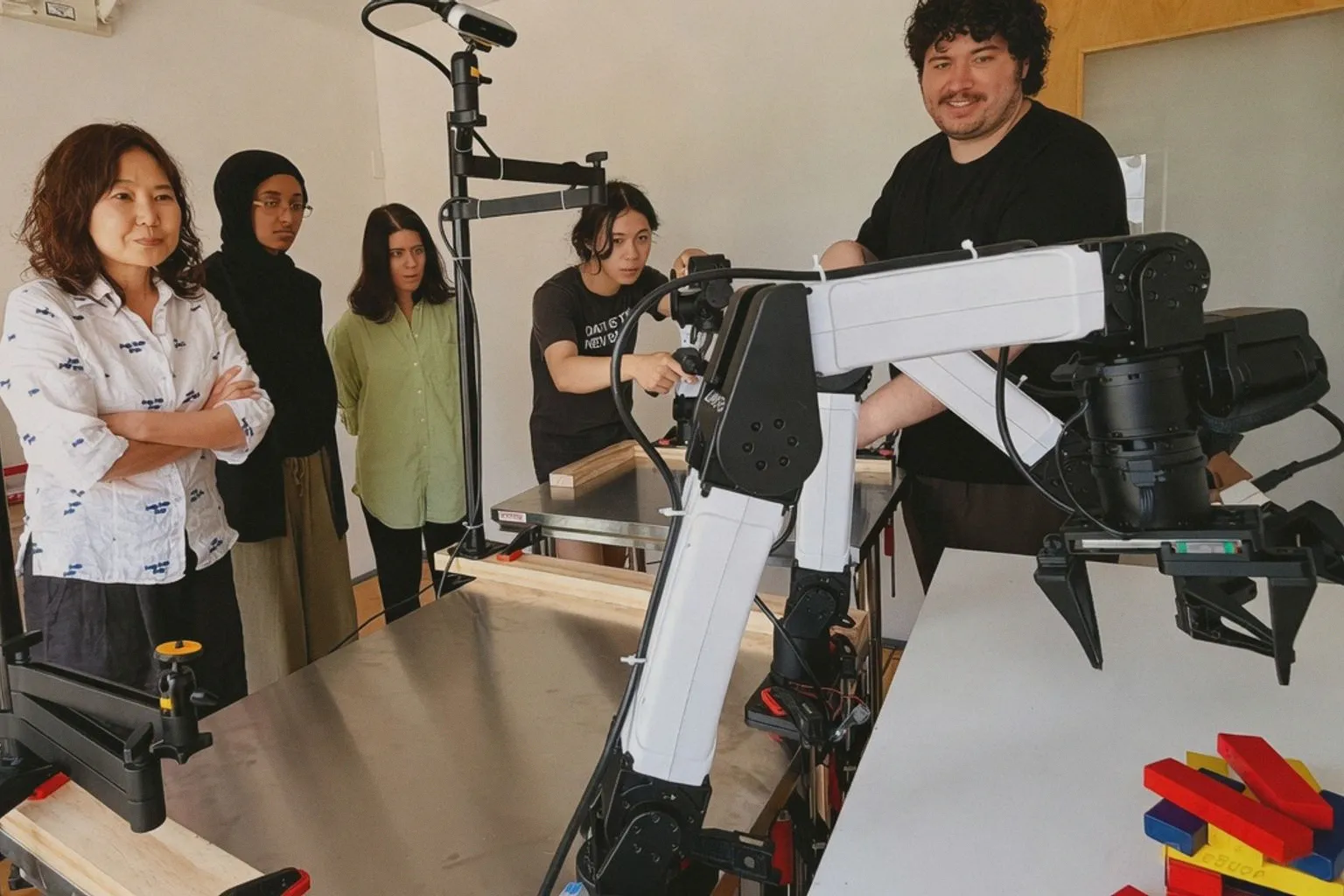
You know that feeling when you unbox a shiny new robot arm—full of ideas for the policy you want to train—and then spend the next six weeks wrestling with driver conflicts, mismatched message types, and one-off teleoperation scripts just to get the thing to move? Every robotics lab has that story. A team at Carnegie Mellon just released an open-source framework called Robot I/O, or RIO, that's specifically built to kill that bootstrapping phase so you can skip straight to the interesting parts.
What RIO Actually Gives You
RIO is a modular software layer that sits between your robot hardware and your AI code. It offers a unified interface for robot control, data collection, teleoperation, and model deployment—regardless of whether you're working with a tabletop arm, a humanoid, or something weirder. The key insight is composability: instead of rewriting boilerplate communication and sensor-handling code every time you switch platforms, you snap together reusable components and customize only the parts that matter for your setup. Jean Oh, an associate research professor in CMU's Robotics Institute, put it bluntly: "The biggest bottleneck in robot learning research isn't ideas, it is infrastructure." RIO is her team's attempt to remove that bottleneck.
The Two-Hour Sanity Check
The best gotcha in their testing story: they handed RIO to Reya Shukla, an undergrad intern with machine learning experience but zero robotics background, and asked her to unbox a robotic arm and get teleoperation running. Following the docs alone, she went from sealed box to live control in roughly two hours. If that number holds across different hardware, it's a massive unlock for reproducibility—labs can stop burning entire semesters on plumbing and actually start collecting the robot data everyone keeps saying they need. As PhD student Eliot Xing noted, robot data doesn't come from thin air; you need infrastructure to generate it, and right now most groups are building that infrastructure from scratch every single time.
Why This Matters for the Broader Stack
Modern robot learning—think general-purpose visuomotor policies and foundation models—wasn't even on the radar when most existing robotics software stacks were designed. Pablo Ortega-Kral, another PhD student on the RIO team, pointed out that this timing mismatch creates real friction: you're trying to bolt transformer-based controllers onto frameworks that assumed monolithic, task-specific codebases. RIO's modular architecture is meant to play nicer with these newer approaches, letting you swap in different AI backends without tearing apart your entire control pipeline.
For the community, the open-source release means we'll eventually get standardized benchmarks and shared datasets that aren't tied to a single lab's custom stack. That's a sanity check the field desperately needs. Here's what to watch for as RIO matures: whether the hardware compatibility list grows quickly beyond CMU's initial platforms, how well it handles real-time constraints for high-frequency control loops, and whether the community adopts it as a de facto standard—or whether it fragments alongside competing frameworks like LeRobot and others already in the space. Either way, the underlying diagnosis is right: we've been shipping AI breakthroughs on top of duct-taped infrastructure for too long, and any serious attempt to fix that is worth your attention.